Two dropper bottles can look interchangeable on a supplement shelf. American ginseng vs B12 drops, however, compares a botanical extract with an essential vitamin. If you follow a plant-based diet, that distinction matters more than shared references to energy. This guide explains their different roles, what to check on labels, and why buying ginseng does not resolve your B12 requirements.
This Garden Organics comparison starts with ingredient identity rather than marketing categories. A liquid format may suit your preferences, but the bottle’s contents determine whether it supplies a nutrient.
Can American ginseng replace B12 drops?
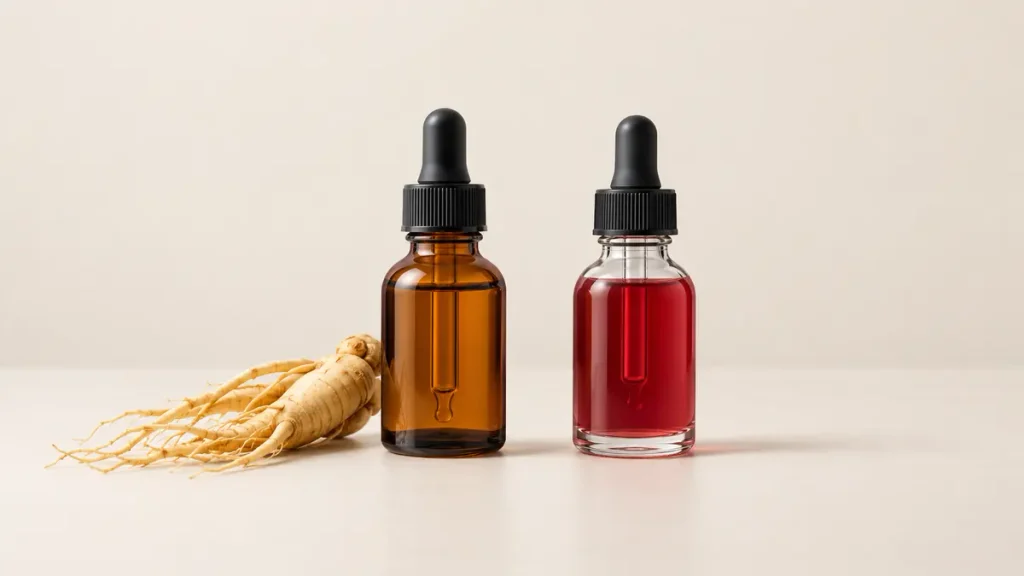
No. American ginseng is not a reliable source of vitamin B12 and cannot replace a B12 supplement in a nutritional plan. A ginseng extract and a vitamin preparation belong to different ingredient categories, even when both come in dropper bottles.
American ginseng refers to the botanical species Panax quinquefolius. Vitamin B12, also called cobalamin, is a nutrient your body requires. It participates in normal nerve function, red blood cell formation, and DNA production.
If a combination product contains both ginseng and added B12, assess its declared vitamin amount separately. The added vitamin supplies the B12, not the presence of ginseng. Do not discontinue or change clinician-directed supplementation because you purchase a botanical product.
| American ginseng drops and B12 drops: the essential distinctions | ||
| Comparison point | American ginseng drops | B12 drops |
|---|---|---|
| Ingredient category | Botanical extract | Vitamin supplement |
| Identity to check | Panax quinquefolius, plant part, and formulation | Vitamin B12 form and amount per serving |
| B12 contribution | Do not count it as a B12 source unless the product separately declares B12 | Supplies the labeled amount of B12 per serving |
| Amount information | Extract weight or volume, sometimes with an extraction ratio | Usually micrograms of B12, alongside the liquid serving size |
| Plant-based suitability | Check the complete formulation and ingredient origins | Check the complete formulation and vegan suitability |
| Interchangeability | No conversion to a B12 serving | No conversion to a ginseng serving |
Why does B12 need separate attention in a plant-based routine?
Ordinary unfortified plant foods are not reliable B12 sources. A plant-based routine therefore needs identifiable sources of this vitamin, rather than an assumption that any plant-derived supplement supplies it.
Fortified foods and vitamin supplements
Plant-based sources can include foods with added B12, such as certain breakfast cereals, plant drinks, and fortified nutritional yeast. Check the specific label. Not every plant drink or nutritional yeast contains added B12.
A registered dietitian can help assess the foods you actually eat and whether your routine provides dependable intake. A product’s plant-based positioning alone does not answer that question.
Different meanings of plant-based
Some people exclude all animal foods. Others eat mostly plants but still include eggs, dairy, or fish. Those patterns can provide different B12 intakes, so the dietary label does not establish your nutritional status.
Likewise, a vegan supplement claim concerns ingredient sourcing. It does not mean the product contains every nutrient relevant to a vegan diet.
What should you compare on the two labels?
Compare ingredient identity, amount per serving, directions, and the complete ingredient list. Do not compare the bottles by dropper size or the largest number printed on the front.
Vitamin amount versus extract amount
B12 labels commonly express the vitamin amount in micrograms, abbreviated mcg. A ginseng label may list milligrams of extract or milliliters of liquid. These numbers describe different materials.
An extraction ratio provides manufacturing information. It does not establish B12 content or create a serving conversion between the products. A larger number on one label does not make it a nutritional substitute for the other.
B12 form and formulation
Common supplemental forms include cyanocobalamin and methylcobalamin. NIH guidance does not establish that supplemental B12 absorption is generally better with one vitamin form than another.
Terms such as methylated or sublingual should not replace a review of the actual amount and directions. Do not assume that a liquid works faster or that placing it under the tongue makes it superior.
Serving instructions and measurement
Read whether directions refer to individual drops, a measured volume, or a dropper serving. Do not carry instructions from one bottle to another. Ask the manufacturer or pharmacist if the supplied measuring device makes the directions unclear.
For products sold in the United States, the Supplement Facts panel is a useful starting point. Other countries use different label formats, but the same ingredient questions remain relevant.
Does energy marketing make these products equivalent?
No. Energy marketing is not an ingredient category and does not demonstrate that two products serve the same purpose.
NIH explains that B12 supplements do not improve energy, athletic performance, or endurance in people who already obtain enough B12. Its essential nutritional role should not become a promise of a noticeable boost.
Unexplained tiredness also does not identify a B12 issue or establish a reason to choose ginseng. Persistent fatigue deserves professional assessment rather than a comparison based on advertising language.
Feeling well is not proof of adequate B12 status either. The body stores B12, and signs of inadequate status can take years to appear. Discuss dietary intake and any need for testing with a clinician.
What should you check on a ginseng product page?
Check the botanical name, complete formulation, serving information, and any separately declared vitamins. A product page should help identify the purchase, not substitute for the full label.
When reviewing an American ginseng tincture with a clearly named botanical, look for Panax quinquefolius. The product page reviewed for this comparison identifies that species and describes an alcohol-free, vegan format. Its visible text does not declare a B12 amount.
Request the current ingredient panel if carrier ingredients or other details are unclear. An alcohol-free claim answers a solvent question, not a vitamin-content question.
Garden Organics takes a label-first editorial stance here: botanical identity, dietary suitability, and nutrient content require separate checks. None establishes the others.
Which questions belong with a pharmacist or clinician?
Ask about your existing B12 plan, medication interactions, and whether a proposed botanical product is appropriate for you. Bring the actual labels rather than only the product names.
Medication history matters. Metformin can affect B12 absorption and status. Some acid-suppressing medicines can interfere with the release of B12 from food. These considerations do not justify changing medicines or supplementation yourself.
American ginseng also requires its own interaction review. A randomized study in healthy volunteers found that an American ginseng preparation reduced warfarin’s anticoagulant effect. That finding warrants professional attention, but it does not quantify the interaction for every commercial tincture.
If you already have a clinician-directed B12 schedule, ask before changing the product, amount, frequency, or route. Convenience and nutritional suitability are separate decisions.
Checklist before changing your supplement routine
Use this checklist to organize the information needed for a useful discussion. Keep nutritional requirements separate from optional botanical purchases.
Clarify the purpose
Write down whether you need a dependable B12 source, prefer a liquid format, or want to discuss a botanical supplement. These are different questions.
List current B12 sources
Include fortified foods, multivitamins, B-complex products, and separate B12 supplements. Record how often you actually use each one.
Save both labels
Capture the ingredient panels, serving sizes, and directions. Front-label descriptions alone leave important details unanswered.
Confirm dietary suitability
Check the complete formulation against your dietary restrictions. Ask about unclear ingredient origins rather than guessing.
Review medicines
Give your pharmacist a complete medicine and supplement list. Include nonprescription products and occasional use.
Keep supervised plans unchanged
Discuss any proposed change to clinician-directed B12 supplementation first. Do not use a botanical purchase as a reason to skip it.
FAQ
Can American ginseng supply my vitamin B12?
No. Do not count American ginseng as a reliable B12 source. Any added B12 must appear separately in the product’s nutrient information.
Are B12 drops automatically vegan?
Do not assume so from the vitamin name. Check the complete ingredient list and the manufacturer’s vegan statement.
Does a vegan diet automatically mean low B12?
No. Intake depends on reliable B12 sources, including fortified foods and supplements. Absorption and individual circumstances also matter.
Is methylcobalamin always better than cyanocobalamin?
No. NIH guidance does not establish generally better supplemental absorption for one B12 form over another.
Can I replace one dropper of B12 with one dropper of ginseng?
No. Dropper volume does not make the ingredients equivalent. There is no valid serving conversion between them.
Should I choose ginseng for unexplained tiredness?
Do not use unexplained tiredness to select a botanical supplement. Discuss persistent symptoms with a clinician.
Glossary
American ginseng
The botanical species Panax quinquefolius.
Botanical extract
A preparation containing substances extracted from plant material.
Cobalamin
The name for the family of vitamin B12 compounds.
Fortified food
A food with added nutrients, such as vitamin B12.
Microgram
A unit of mass abbreviated mcg, commonly used for B12 amounts.
Serving size
The quantity used as the basis for a product’s declared amounts.
Sublingual
Describes placement under the tongue according to product directions.
Conclusion
American ginseng and B12 drops are different purchases: one supplies a botanical extract, while the other supplies a specified vitamin. Keep a reliable B12 plan separate from botanical choices, and discuss changes to clinician-directed supplementation before making them.
Sources Used
NIH Office of Dietary Supplements, vitamin B12 consumer guidance — ods.od.nih.gov/factsheets/VitaminB12-Consumer/
NIH Office of Dietary Supplements, vitamin B12 forms and absorption — ods.od.nih.gov/factsheets/VitaminB12-HealthProfessional/
NHS guidance on vegan diets and fortified B12 sources — nhs.uk/live-well/eat-well/how-to-eat-a-balanced-diet/the-vegan-diet/
FDA dietary supplement labeling guidance, nutrition labeling chapter — fda.gov/food/dietary-supplements-guidance-documents-regulatory-information/dietary-supplement-labeling-guide-chapter-iv-nutrition-labeling
American ginseng product identity and published formulation claims — gardenix.com/products/american-ginseng-tincture
Randomized trial examining American ginseng and warfarin — pubmed.ncbi.nlm.nih.gov/15238367/